Ademco Alarm Manual: A Comprehensive Guide
Navigating home security requires understanding your system. This guide details Ademco (Honeywell Home) alarms, covering installation, programming, troubleshooting, and maintenance for optimal protection.
Understanding Ademco Alarm Systems
Ademco, now known as Honeywell Home, provides robust security solutions for residential and commercial properties. These systems are designed to deter intruders, detect fires, and offer peace of mind through 24/7 monitoring options. A core component is the control panel, the system’s brain, managing all connected devices.
Understanding the different components – keypads, sensors, sirens – is crucial for effective use. Ademco systems prioritize reliability and scalability, adapting to various property sizes and security needs. Proper installation and programming are vital for optimal performance, ensuring all zones are correctly configured and sensors function as intended. Regular maintenance guarantees long-term effectiveness.
History of Ademco (Honeywell Home)

Ademco, originating as a pioneering force in the alarm industry, has a rich history spanning several decades. Founded in 1957, the company quickly established itself as an innovator, focusing on reliable and user-friendly security systems. Over time, Ademco expanded its product line, incorporating advanced technologies like wireless communication and smart home integration.
In 2018, Ademco was acquired by Resideo, and subsequently rebranded as Honeywell Home. This transition leveraged Honeywell’s extensive resources and expertise, further enhancing the quality and scope of their security offerings. Despite the name change, the core principles of innovation and reliability remain central to the Honeywell Home brand, continuing Ademco’s legacy.
Types of Ademco Alarm Systems
Ademco (Honeywell Home) offers a diverse range of alarm systems to suit varying needs and preferences. These systems broadly fall into three categories: wired, wireless, and hybrid. Wired systems provide a robust and reliable connection, ideal for new construction or extensive renovations, utilizing physical wiring for all components.
Wireless systems offer flexibility and ease of installation, communicating via radio frequency, making them perfect for existing homes. Hybrid systems combine the benefits of both, utilizing wired components for critical sensors and wireless for convenience. Choosing the right system depends on factors like budget, property type, and desired level of security.
Wired Alarm Systems
Ademco wired alarm systems represent a traditional, highly dependable security solution. These systems utilize physical wiring to connect all components – control panel, sensors, keypad, and siren – ensuring a secure and interference-resistant connection. Installation typically requires professional expertise, involving running wires through walls and ceilings.
While installation can be more complex, wired systems offer superior reliability and are less susceptible to wireless interference. They are particularly well-suited for new constructions or during major renovations, providing a long-term, robust security infrastructure. Power outages are mitigated by a backup battery within the control panel.
Wireless Alarm Systems
Ademco wireless alarm systems offer flexibility and ease of installation, making them ideal for existing homes or renters. These systems communicate via radio frequency (RF) signals, eliminating the need for extensive wiring. Components like door/window sensors, motion detectors, and keypads connect wirelessly to the central control panel.
Installation is generally straightforward, often a DIY project, but professional installation is also available. Wireless systems rely on battery power, requiring periodic battery replacements. While convenient, they can be potentially susceptible to interference, though Ademco systems employ encrypted signals to minimize this risk.
Hybrid Alarm Systems
Ademco hybrid alarm systems combine the reliability of wired connections with the convenience of wireless technology. This approach allows for a customized security solution, utilizing wired sensors for critical areas like entry doors and windows, while employing wireless sensors in locations where wiring is difficult or impractical.
Hybrid systems offer a balance between security and flexibility. They benefit from the consistent performance of wired components and the ease of expansion offered by wireless devices. This configuration can minimize interference and provide a robust, comprehensive security network for both new constructions and existing homes.
Ademco Alarm System Components
A complete Ademco alarm system comprises several key components working in unison to provide comprehensive security. The control panel serves as the system’s brain, processing signals and activating alarms. Keypads allow for arming, disarming, and programming. Door and window sensors detect unauthorized entry, while motion detectors cover larger areas.
Sirens and strobes provide audible and visual alerts upon alarm activation. A backup battery ensures continued operation during power outages. Understanding each component’s function is crucial for effective system management and troubleshooting.
Control Panel
The Ademco control panel is the central hub of your security system, responsible for managing all connected devices and responding to security breaches. It receives signals from sensors, activates the siren, and communicates with monitoring services if applicable. Modern panels often feature touchscreen interfaces and smartphone integration for remote control.
Proper installation and programming are vital for optimal performance. The panel requires a dedicated power supply and often a phone line or internet connection for communication. Regular testing ensures the panel is functioning correctly and ready to protect your property.
Keypad
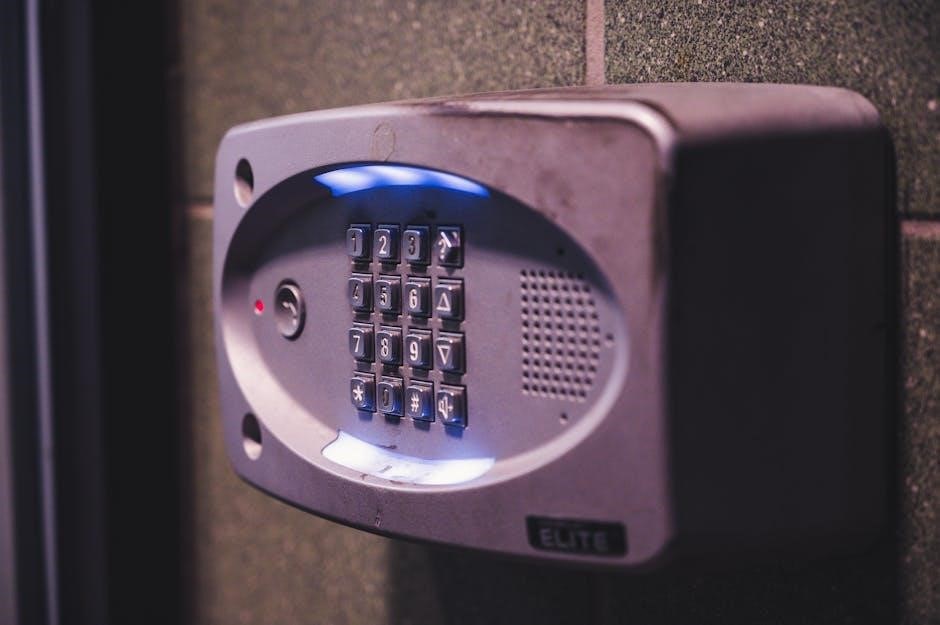
The Ademco keypad serves as the primary user interface for interacting with your alarm system. It allows you to arm and disarm the system, enter user codes, bypass zones, and view system status. Keypads come in various designs, including hardwired and wireless models, with features like backlit displays and panic buttons.

Effective use of the keypad is crucial for daily operation. Remember to keep your user code confidential and familiarize yourself with the arming modes (stay, away, night). Regularly test the keypad’s functionality to ensure it’s responding correctly and providing reliable access to your security features.
Door and Window Sensors
Ademco door and window sensors are fundamental components of your home security system, acting as the first line of defense against intrusion. These sensors typically consist of two parts: a sensor and a magnet, installed on the door or window frame and the moving part, respectively.
When the door or window is opened, the magnetic contact is broken, triggering an alarm signal to the control panel. Proper placement and secure mounting are essential for reliable operation. Regularly test these sensors to confirm they are functioning correctly and haven’t been tampered with, ensuring continuous protection.
Motion Detectors
Ademco motion detectors enhance your security system by detecting movement within a designated area. Utilizing various technologies like passive infrared (PIR), these sensors identify changes in heat signatures caused by intruders. Strategic placement is crucial; avoid direct sunlight, heat sources, and areas with high pet activity to minimize false alarms.
Adjusting the sensitivity settings allows customization for your environment. Regularly testing the detectors ensures they are functioning optimally. Consider the detection range and angle when positioning, maximizing coverage while avoiding blind spots. Proper installation and maintenance are key to reliable intrusion detection.
Sirens and Strobes
Ademco alarm systems utilize sirens and strobes to provide both audible and visual alerts upon detecting an intrusion. Sirens emit a loud, piercing sound designed to deter burglars and alert occupants. Strobes, flashing bright lights, enhance visibility, particularly for those with hearing impairments or during nighttime events.
Proper placement is vital; sirens should be positioned for maximum audibility, while strobes require clear lines of sight. Systems often allow for adjustable volume levels and strobe patterns. Regular testing ensures functionality, and backup power ensures operation during power outages. These components are critical for a comprehensive security response.
Backup Battery
A crucial component of any Ademco alarm system is the backup battery. This provides uninterrupted power during electrical outages, ensuring continued security coverage. Without a functioning backup, the system becomes vulnerable, leaving your property unprotected when you need it most.
Typically sealed lead-acid or lithium-ion, these batteries require periodic testing and eventual replacement – usually every 3-5 years. Low battery warnings from the control panel indicate the need for attention. Proper battery maintenance is essential for reliable alarm operation and peace of mind, safeguarding against potential security breaches.
Ademco Alarm System Installation
Installing an Ademco alarm system requires careful planning and execution. Homeowners face a choice: professional installation or a DIY approach. Professional installers offer expertise, ensuring correct wiring and configuration, while DIY provides cost savings but demands technical skill.
Wired systems necessitate running cables, demanding knowledge of electrical codes. Wireless systems simplify installation, relying on sensor placement and signal strength. Regardless of the method, proper control panel mounting and thorough sensor testing are vital for a fully functional and reliable security system.
Professional Installation vs. DIY
Choosing between professional installation and a DIY approach for your Ademco alarm system is crucial. Professionals bring expertise in wiring, zone programming, and system configuration, guaranteeing optimal performance and adherence to safety standards. This minimizes errors and potential false alarms, offering peace of mind.
DIY installation offers cost savings but requires technical aptitude and a commitment to meticulous work. Incorrect wiring or sensor placement can compromise security. Carefully assess your skills and comfort level before opting for DIY; professional help ensures a robust and reliable security solution.
Wiring Considerations (for Wired Systems)
Proper wiring is paramount for a reliable Ademco wired alarm system. Utilize the correct gauge wire, typically 18-22 AWG, for consistent signal transmission. Ensure wires are neatly organized and securely connected to the control panel and sensors, avoiding loose connections that can trigger false alarms or system failures.
Follow color-coding conventions – typically red for power, black for ground, and other colors for zone inputs. Shielded wiring is recommended in areas prone to interference. Always disconnect power before working with wiring, and adhere to local electrical codes for a safe and compliant installation.
Wireless Sensor Placement
Optimal placement maximizes the effectiveness of Ademco wireless sensors. Door and window sensors should be mounted securely on both the frame and the moving part, ensuring proper alignment for reliable detection. Motion detectors require clear lines of sight, avoiding obstructions like furniture or curtains, and should be positioned to cover high-traffic areas.
Consider pet immunity settings to minimize false alarms. Avoid placing sensors near heat sources or direct sunlight, which can interfere with their operation. Regularly test sensor range and signal strength to confirm consistent communication with the control panel.
Control Panel Mounting
Securely mounting the Ademco control panel is crucial for system reliability. Choose a central, easily accessible location, protected from extreme temperatures and moisture. Avoid areas prone to interference, like near large metal objects or electrical panels. Ensure the mounting surface is sturdy enough to support the panel’s weight.
Proper wiring and cable management are essential for a clean installation. Maintain sufficient space around the panel for ventilation and future servicing. Consider concealing wiring within walls or using cable conduits for a professional appearance and enhanced security.
Ademco Alarm System Programming
Programming your Ademco system personalizes its functionality. Begin by creating unique user codes, granting authorized access while maintaining security. Zone programming defines each sensor’s location and behavior, crucial for accurate alarm identification. Adjust entry and exit delays to allow sufficient time for arming and disarming without triggering false alarms.
Thorough sensor testing is vital after programming. Walk-test each sensor to confirm proper communication with the control panel. Regularly review and update programming as needed to adapt to changing security requirements and user preferences.
User Code Creation
Establishing secure user codes is paramount for system control. Each authorized individual should have a unique code, avoiding easily guessable numbers like birthdays or addresses. Master codes grant full system access, requiring careful safeguarding. Assign individual codes with limited privileges for family members or trusted personnel.
Regularly update user codes, especially after a security breach or when someone leaves the household. Ademco systems typically allow for numerous user codes, enhancing flexibility and accountability. Document all active codes and their associated users for efficient management;
Zone Programming
Zone programming defines how the system reacts to sensor triggers. Each sensor is assigned to a specific zone – for example, “Front Door,” “Living Room Window,” or “Motion Detector.” Proper zone configuration is crucial for accurate alarm identification and dispatch.
Customize zone types to reflect their function: instant, entry delay, exit delay, or no entry/exit delay. This dictates how the system responds when a zone is breached. Incorrect zone programming can lead to false alarms or compromised security. Consult the Ademco manual for detailed instructions on zone mapping.
Entry and Exit Delays
Entry and exit delays provide a timed window to arm or disarm the system without triggering a false alarm. These delays are essential for allowing occupants to leave or enter the premises safely and conveniently. The length of these delays is programmable, typically ranging from 30 to 60 seconds.
Customize delay times based on your needs and the layout of your home. Shorter delays are suitable for quick access, while longer delays are better for larger properties. Incorrectly set delays can cause unnecessary alarm activations or leave your home vulnerable.
Sensor Testing
Regular sensor testing is crucial for ensuring your Ademco alarm system functions correctly. This process verifies that each door, window sensor, and motion detector communicates effectively with the control panel. Most systems have a dedicated “test” mode accessible through the keypad, initiating a walk-through sequence.
During testing, activate each sensor individually and confirm the control panel registers the event. Address any sensors that fail to respond promptly, checking for low batteries or obstructions. Consistent testing provides peace of mind and reliable security.

Troubleshooting Common Ademco Alarm Issues
Addressing issues promptly maintains your Ademco system’s reliability. False alarms are frequent, often caused by improperly installed sensors, drafts, or pets; adjust sensitivity or placement. Low battery warnings indicate a need for immediate replacement to prevent system failure. Sensor malfunctions require inspection for damage or obstructions, potentially needing professional repair.
Communication failures, impacting monitoring services, may stem from a disconnected phone line or internet outage; verify connections. Systematic troubleshooting ensures continued security and minimizes disruptions.

False Alarms
Frequent false alarms diminish trust in your Ademco system and can incur fines. Common causes include loose-fitting doors/windows triggering sensors, pets moving within sensor ranges, or environmental factors like drafts affecting motion detectors. Adjusting sensor sensitivity is often the first step; lower settings reduce reactivity. Ensure proper installation, securing all sensors firmly.
Regularly test your system to identify and rectify potential issues. Review event logs to pinpoint recurring triggers and address underlying problems proactively, ensuring reliable security.
Low Battery Warnings
Ademco systems provide low battery warnings, typically indicated by a flashing light on the keypad or a voice announcement. Ignoring these warnings compromises system reliability; a dead battery renders sensors and the control panel inoperable. Replace batteries immediately with the correct type – usually AA or 9V – as specified in your manual.
Consider a scheduled battery replacement routine, perhaps twice yearly, to prevent unexpected failures. Some systems allow remote battery status monitoring via a connected service, offering proactive alerts.
Sensor Malfunctions
Ademco alarm systems can experience sensor malfunctions, often signaled by a “trouble” light or specific zone indicator on the keypad. Common causes include loose wiring, physical damage, or obstructions blocking the sensor’s field of view. Inspect sensors for visible damage and ensure proper alignment.
Test each sensor individually using the system’s test mode. If a sensor consistently fails, replace it. Refer to your manual for specific troubleshooting steps related to each sensor type – door, window, or motion.
Communication Failures
Ademco alarm systems rely on consistent communication with the monitoring center. Communication failures manifest as a “communication” or “no dial tone” error on the keypad. Potential causes include a disconnected phone line (for landline systems), a power outage affecting the modem, or issues with the cellular connection (for cellular-based systems).
Verify the phone line is securely connected, or check the cellular signal strength. Restart the control panel to re-establish the connection. If the problem persists, contact your monitoring company or a qualified technician for assistance.

Ademco Alarm System Maintenance
Regular maintenance ensures your Ademco alarm system operates reliably. Annually, replace backup batteries – crucial during power outages. Periodically, clean sensors with a soft, dry cloth to remove dust and debris that can cause false alarms or malfunctions. Monthly, test the system thoroughly, activating each sensor and verifying communication with the monitoring center.
Check for any firmware updates available from Honeywell Home, as these often include performance improvements and security enhancements. Proactive maintenance extends the system’s lifespan and guarantees consistent protection.
Battery Replacement
Replacing batteries in your Ademco alarm system is vital for uninterrupted security. Typically, control panel batteries last 3-5 years, while sensor batteries have a shorter lifespan of 1-2 years. Low battery warnings indicate it’s time for replacement; heed these promptly. Use only manufacturer-approved batteries to avoid damaging the system.
During a power outage, the battery provides backup power. Always test the system after replacing batteries to confirm proper functionality. Document replacement dates for easy tracking and future maintenance scheduling, ensuring consistent protection.
Sensor Cleaning
Regular cleaning of Ademco alarm sensors ensures optimal performance and minimizes false alarms. Dust, dirt, and insects can interfere with sensor functionality, leading to unreliable detection. Use a soft, dry cloth to gently wipe down sensors; avoid harsh chemicals or abrasive cleaners. Specifically, clean door and window sensors, as well as motion detectors.
Inspect sensors for any obstructions and clear them carefully. Pay attention to the lens of motion detectors, ensuring it’s free from smudges. Consistent cleaning, performed every six months, contributes to a reliable and effective security system.
System Testing
Routine system testing is crucial for verifying the functionality of your Ademco alarm. Perform a comprehensive test monthly, activating each sensor – door/window contacts, motion detectors – to confirm signals reach the control panel. Walk-test motion detectors to ensure proper coverage. Verify siren activation and communication with the monitoring center (if applicable).
Utilize the keypad to initiate a system test mode. Document any failures or inconsistencies and address them promptly. Regular testing provides peace of mind, confirming your security system remains a reliable deterrent against potential threats.
Firmware Updates
Maintaining current firmware on your Ademco alarm control panel is vital for optimal performance and security. Manufacturers regularly release updates addressing vulnerabilities, improving compatibility, and adding new features. Check the Honeywell Home support website frequently for available updates specific to your panel model.
Follow the provided instructions carefully during the update process, ensuring a stable power supply. Interruptions during a firmware update can potentially damage the control panel. Updating firmware enhances system reliability and protects against emerging security threats, bolstering your home’s safety.
Ademco Alarm System Monitoring Options
Ademco alarm systems offer flexible monitoring choices to suit diverse needs. Self-monitoring allows direct control via a smartphone app, receiving alerts and managing the system independently, requiring consistent vigilance. Professional monitoring, through a third-party provider, offers 24/7 surveillance, automatically dispatching emergency services upon alarm activation.
Monitoring contracts vary in length and cost, often including equipment maintenance and potential discounts on homeowner’s insurance. Carefully review contract details, understanding cancellation policies and associated fees before committing to a service. Choosing the right option balances cost, convenience, and peace of mind.
Self-Monitoring
Self-monitoring with an Ademco system empowers homeowners with complete control, utilizing smartphone apps for real-time alerts and system management. This option eliminates monthly fees, but demands consistent user attention; you are responsible for verifying alarms and contacting emergency services. Reliable internet connectivity is crucial for receiving notifications promptly.
Consider your lifestyle and responsiveness. If you travel frequently or have limited availability, self-monitoring may not be ideal. Ensure you understand alarm signals and local emergency procedures. Regular system testing is vital to confirm functionality and maintain a secure environment.
Professional Monitoring
Professional monitoring provides 24/7 security through a central station that responds to alarm events. When an alarm triggers, trained personnel verify the situation and dispatch emergency services – police, fire, or medical – as needed. This offers peace of mind, especially when you’re away or unable to respond immediately.
Various monitoring plans are available, differing in features and cost. Consider options like cellular backup for reliable communication during power outages. Ensure the monitoring company is reputable and UL-listed. Review contract terms carefully, noting cancellation policies and potential fees before committing.
Monitoring Contract Details
Carefully scrutinize your Ademco alarm monitoring contract before signing. Pay close attention to the contract length, typically ranging from one to three years, and understand any early termination fees. Review the monthly monitoring costs and any potential price increases during the contract term. Clarify what services are included – cellular backup, smart home integration, or video verification – and their associated costs.
Understand the renewal terms and automatic renewal clauses. Confirm the cancellation process and required notice period. Check for liability limitations and dispute resolution procedures. A thorough understanding of these details ensures a transparent and satisfactory monitoring experience.
Ademco Alarm System Manual Resources
Accessing reliable resources is crucial for Ademco alarm system owners. Honeywell Home’s official support website provides a wealth of information, including downloadable manuals for various systems and components. These manuals offer detailed instructions on installation, programming, and troubleshooting. Online forums and communities dedicated to home security can also provide valuable insights and peer support.
For direct assistance, contacting Honeywell Home customer support via phone or email is recommended. Ensure you have your system model number and relevant details readily available for efficient support. Utilizing these resources empowers you to effectively manage and maintain your Ademco alarm system.
Online Manuals
Numerous websites archive Ademco (Honeywell Home) alarm system manuals, offering convenient access to documentation. These digital resources often include user guides, installation instructions, and programming references for older and current models. Searching online using your specific system’s model number is the most effective method for locating the correct manual. Beware of unofficial sources; prioritize downloads from reputable websites associated with Honeywell or authorized distributors.
Digital manuals provide a searchable format, allowing quick access to specific information. They are also environmentally friendly and readily available whenever needed, eliminating the need for physical storage. Always verify the manual’s revision date to ensure it aligns with your system’s version.
Honeywell Home Support Website
The official Honeywell Home support website is a primary resource for Ademco alarm system owners. It features a comprehensive knowledge base, frequently asked questions (FAQs), and troubleshooting guides addressing common issues. Users can often find solutions to problems without needing to contact customer support directly. The website also provides access to downloadable manuals, software updates, and compatibility information.
Registration of your system on the Honeywell Home website unlocks additional benefits, including personalized support and access to exclusive content. Navigating the site is straightforward, with clear categories and a search function to quickly locate relevant information. Regularly checking the support website ensures you have the latest updates and resources.
Contacting Customer Support
When self-help resources prove insufficient, contacting Honeywell Home customer support is the next step. Support is typically available via phone, offering direct assistance from trained technicians. Be prepared to provide your system model number, serial number, and a detailed description of the issue you’re experiencing. Online chat support may also be available, providing a convenient alternative to phone calls.
Before contacting support, review your system’s warranty status. Some issues may be covered under warranty, potentially leading to free repairs or replacements. Keep a record of your interactions with customer support, including dates, times, and the names of representatives you spoke with. This documentation can be helpful if further assistance is needed.